

×
1 Choose EITC/EITCA Certificates
2 Learn and take online exams
3 Get your IT skills certified

Confirm your IT skills and competencies under the European IT Certification framework from anywhere in the world fully online.

EITCA Academy

Digital skills attestation standard by the European IT Certification Institute aiming to support Digital Society development

LOG IN TO YOUR ACCOUNT

CREATE AN ACCOUNT FORGOT YOUR PASSWORD?

FORGOT YOUR PASSWORD?

AAH, WAIT, I REMEMBER NOW!

CREATE AN ACCOUNT

ALREADY HAVE AN ACCOUNT?
EUROPEAN INFORMATION TECHNOLOGIES CERTIFICATION ACADEMY - ATTESTING YOUR PROFESSIONAL DIGITAL SKILLS
  • SIGN UP
  • LOGIN
  • INFO

EITCA Academy

EITCA Academy

The European Information Technologies Certification Institute - EITCI ASBL

Certification Provider

EITCI Institute ASBL

Brussels, European Union

Governing European IT Certification (EITC) framework in support of the IT professionalism and Digital Society

  • CERTIFICATES
    • EITCA ACADEMIES
      • EITCA ACADEMIES CATALOGUE<
      • EITCA/CG COMPUTER GRAPHICS
      • EITCA/IS INFORMATION SECURITY
      • EITCA/BI BUSINESS INFORMATION
      • EITCA/KC KEY COMPETENCIES
      • EITCA/EG E-GOVERNMENT
      • EITCA/WD WEB DEVELOPMENT
      • EITCA/AI ARTIFICIAL INTELLIGENCE
    • EITC CERTIFICATES
      • EITC CERTIFICATES CATALOGUE<
      • COMPUTER GRAPHICS CERTIFICATES
      • WEB DESIGN CERTIFICATES
      • 3D DESIGN CERTIFICATES
      • OFFICE IT CERTIFICATES
      • BITCOIN BLOCKCHAIN CERTIFICATE
      • WORDPRESS CERTIFICATE
      • CLOUD PLATFORM CERTIFICATENEW
    • EITC CERTIFICATES
      • INTERNET CERTIFICATES
      • CRYPTOGRAPHY CERTIFICATES
      • BUSINESS IT CERTIFICATES
      • TELEWORK CERTIFICATES
      • PROGRAMMING CERTIFICATES
      • DIGITAL PORTRAIT CERTIFICATE
      • WEB DEVELOPMENT CERTIFICATES
      • DEEP LEARNING CERTIFICATESNEW
    • CERTIFICATES FOR
      • EU PUBLIC ADMINISTRATION
      • TEACHERS AND EDUCATORS
      • IT SECURITY PROFESSIONALS
      • GRAPHICS DESIGNERS & ARTISTS
      • BUSINESSMEN AND MANAGERS
      • BLOCKCHAIN DEVELOPERS
      • WEB DEVELOPERS
      • CLOUD AI EXPERTSNEW
  • FEATURED
  • SUBSIDY
  • HOW IT WORKS
  •   IT ID
  • ABOUT
  • CONTACT
  • MY ORDER
    Your current order is empty.
EITCIINSTITUTE
CERTIFIED

EITC/CG/ADPD Artistic Digital Portrait Drawing

by EITCA Academy / Friday, 24 October 2025 / Published in
Current Status

Not Enrolled
Enroll in this programme to get access

Price

€11.00

Get Started

Enrol for this Certification

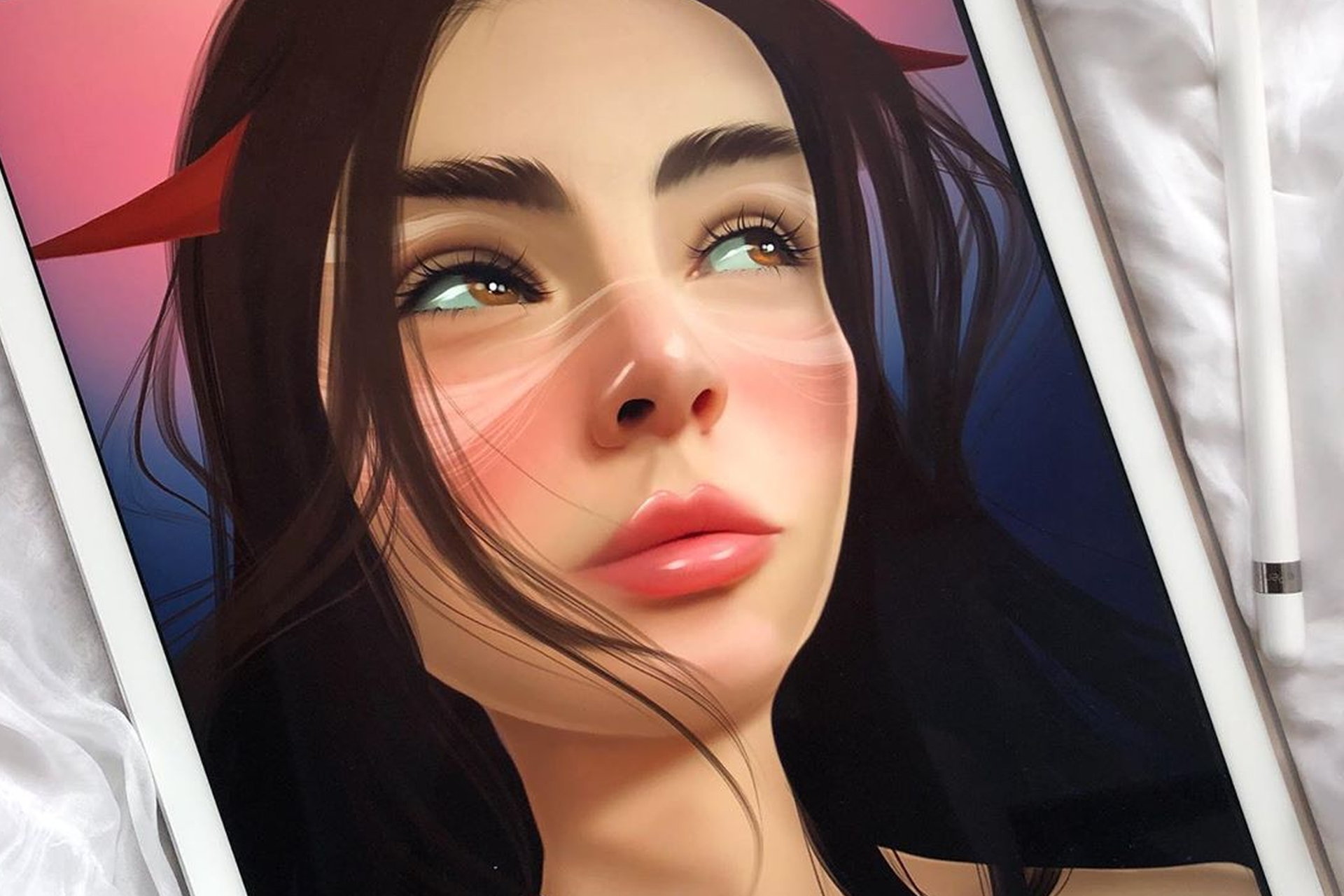
EITC/CG/ADPD Artistic Digital Portrait Drawing is the European IT Certification programme focused on modern, practice-oriented techniques for creating expressive, believable digital portraits in contemporary graphic software.

The curriculum of the EITC/CG/ADPD Artistic Digital Portrait Drawing covers essential, studio-tested knowledge and workflows for portrait painting in digital media—starting from skin tone design and facial anatomy through feature rendering (eyes, nose, lips, ears, hair), reference work, sculpting-style iteration, smart rendering, and dramatic light & shadow finishing. It follows a structured EITCI certification curriculum with self-learning materials and referenced open-access video didactic content to prepare you for earning this EITC Certification by passing the corresponding examination.

Digital portrait drawing blends classical art fundamentals with the flexibility of layers, masks, and non-destructive editing in software such as Photoshop, Procreate, Krita, Clip Studio Paint or Affinity Photo. This programme develops a reliable, repeatable process: planning palettes, blocking shapes, building forms, refining features, and adding mood with light. You will learn how to choose brushes and blending methods that support painterly results, how to keep proportions under control, how to spot and fix common mistakes (tilted features, muddy colours, plastic skin), and how to finish confidently without over-rendering.

A key pillar of the programme is skin tones. You’ll learn to choose base complexions using the colour wheel (hue, value, chroma), create limited palettes that remain coherent, and exploit temperature shifts (warm light/cool shadow or vice versa). You’ll practice glazing and soft-to-hard transitions to suggest subsurface scattering (cheeks, tip of the nose, ears) and manage tricky areas like eye sockets or the jaw/neck connection. Non-standard skin colours—stylised blues, greens, or violets—are introduced as creative options while maintaining believable value structure so the portrait still “reads” correctly.

Eyes anchor likeness and emotion. The curriculum breaks down eye shapes and proportions (eyeball as a sphere, lids wrapping around form), placement on the head, and perspective tilt. You’ll study iris texture, specular highlights, corneal reflections, and tear meniscus to avoid the “sticker” look. A guided walk-through demonstrates building an eye from diffuse base to crisp accents, including when and where to keep edges sharp vs. soft for realism and focus control.

The nose is taught as a set of simple volumes (bridge, ball, wings) unified by planar thinking. You’ll map core shadows, reflected light from cheeks, and soft transitions at the alar cartilage. Exercises cover front, three-quarter, and profile views, with strategies to avoid “outlined” nostrils and to integrate pores or freckles subtly through texture brushes and noise overlays.

The curriculum coverage is following:

  • For lips, you’ll learn anatomy (tubercle, vermilion border, philtrum), observing how light creates a natural sheen without plastic gloss. The course demonstrates value-first modelling, believable colour variation (cooler upper lip, warmer lower lip), and a start-to-finish lips study that clarifies edges, micro-textures, and specular control.
  • Ears (often overlooked) are approached with a practical map: helix, antihelix, concha, tragus, and lobule. You’ll practice soft cavity shadows balanced by subtle bounce light from surrounding skin and hair. The walkthrough emphasises simplifying the ear into few planes first, then adding detail only where it supports the focal hierarchy.
  • In hair, you’ll shift from drawing individual strands to designing masses and flow. The method: silhouette → major clumps → internal rhythm lines → selective strand accents. You’ll match hairstyle shape to head structure, separate lit vs. shadow groups, and add believable sheen by controlling values rather than over-brightening.
  • Working with references is decisive for growth. You’ll learn to choose useful vs. misleading photos (lens distortion, blown highlights, filtered colour), manage single vs. multi-photo references, and translate reality through artistic intent. The programme also introduces 3D aids (base mannequins, head scans) to study perspective, lighting, and obscure angles without copying mechanically.
  • The sculpting approach encourages painting without line art—shaping forms directly with value and colour, as if pushing and carving clay. You’ll iterate rapidly, staying flexible via non-destructive layers, selections, and liquify/warp. This builds confidence in big-to-small thinking: design first, details last.
  • Smart rendering addresses when to refine and when to suggest. You’ll define a focal point (often eyes) and deliberately keep supporting areas looser. This avoids “even detail everywhere,” which flattens impact and wastes time. You’ll learn to use edge variety, texture economy, and brushwork cadence to create professional finishes efficiently.
  • Finally, light and shadow as an aftereffect demonstrates late-stage mood crafting: adding rim light, window-shape breaks, or coloured gels using blend modes, gradient maps, and adjustment layers. You’ll practice rescuing average portraits with bolder lighting while preserving form, and compile a set of reusable layer recipes.

Portrait success depends on proportion control. You will compare Loomis head guidelines to freeform observation so you can block credible heads at any angle. Using simple axis lines (brow, nose, mouth) and tilt checking, you’ll keep features aligned in perspective. Gesture and rhythm unify the head and neck; we’ll reinforce this with silhouette checks and value grouping (two- or three-value studies) before colour.

Brushwork and blending are treated as vocabulary. You’ll assemble a minimal brush set (one hard round, one soft round, a textured brush, and a smudge/blur option) to avoid tool overload. We’ll examine opacity vs. flow, pressure curves, and mixer brush or smudge settings for painterly transitions. Texture passes—subtle noise, canvas grain, or custom speckles—are used sparingly to break digital uniformity.

Colour workflows include building a skin-safe gamut via gamut masks or HSL constraints. You’ll learn to preserve value while exploring hue shifts, and to avoid over-saturation that breaks realism. A/B studies compare warm-key vs. cool-key portraits under identical value structures to show how temperature alone changes mood.

The programme emphasises checkpoints: flip canvas, squint tests, and temporary grayscale conversions (via adjustment layers) to catch drawing and value problems early. You’ll also see a practical layer stack (base shapes, midtones, shadows, lights, accents, post-FX) that keeps files tidy for iteration and print.

To acquaint yourself in-detail with the certification curriculum you can expand and analyze the table below.

The EITC/CG/ADPD Artistic Digital Portrait Drawing Certification Curriculum references open-access didactic materials in video form. Learning is divided into a step-by-step structure (programmes → lessons → topics) covering: (1) Skin tones, (2) Eyes, (3) Nose, (4) Lips, (5) Ears, (6) Hair, (7) References, (8) Sculpting approach, (9) Smart rendering, (10) Light & shadow. Participants can access answers and ask questions in the “Questions and answers” section of the e-learning interface under the currently progressed topic. Direct and unlimited consultancy with domain experts is also accessible via the platform’s messaging system and contact form.
For details on the Certification procedure check How it Works.

Primary supportive curriculum reading & tutorials

  • Art Rocket: Tutorials & Art Advice for Digital Creatives — a deep library of portrait-relevant step-by-steps (features, hair, lighting) in article + video form.
  • Procreate Handbook (Official) — complete, searchable guide to brushes, layers, blend modes, masks, and more.
  • Krita Manual (Official) — free, open-source painting manual with tutorials and workflows applicable to any app.

Supportive materials on facial anatomy & features

  • How to Draw a Mouth & Lips (Art Rocket) — shapes, anatomy, and full color demo.
  • How to Draw a Nose (Art Rocket) — planar breakdown + angles.
  • Ultimate Guide to Drawing Ears (Art Rocket) — clear anatomy with multi-angle references.
  • Art Rocket: Anatomy tag — noses, lips, expressions, eye painting, and more.
  • How to Draw Hair: 3 Tips
  • 5 Tips on How to Draw Eyes — proportion & stylization notes.{index=14}

Topic-specific open tutorials (aligned to the 10-topic curriculum)

Working with references (portrait edition)

  • Line of Action: Faces & Expressions Tool — timed practice sessions.
  • Using 3D Head Models in Clip Studio — adjustable 3D heads for angle & lighting reference.

Sculpting approach to painting (lineless / shape-first)

  • Coloring WITHOUT Lineart — build forms by “sculpting” values & color.
  • Creating Art without Outlines (Clip Studio TIPS) — flat shape separations → texture → light.
  • Sketch to Final: Digital Character Painting — process overview & layer strategy.

Smart rendering (where to add detail; edges & focus)

  • Learning to See: Edge Control & Depth — when to lose vs. sharpen edges.
  • Edge Control & Values (demo) — applied edge handling in painting.

Light & shadow as an after-effect (adding drama at the end)

  • Dynamic Lighting with Gradient Maps — non-destructive dramatic lighting pass.
  • Fake Cinematic Lighting (Photoshop Gradient Maps) — fast color-grading & rim-light tricks.
  • Create Dramatic Lighting in Portraits — principles + layer setups.

Download the complete offline self-learning preparatory materials for the EITC/CG/ADPD Artistic Digital Portrait Drawing programme in a PDF file

PDF Icon EITC/CG/ADPD preparatory materials – standard version

PDF Icon EITC/CG/ADPD preparatory materials – extended version with review questions

Certification Programme Curriculum

Introduction to colors and tones in digital portraits 1 Topic
You don't currently have access to this content
Lesson Content
0% Complete 0/1 Steps
Skin tones
Facial features in portraits 5 Topics
You don't currently have access to this content
Lesson Content
0% Complete 0/5 Steps
Eyes
Nose
Lips
Ears
Hair
Working with references 1 Topic
You don't currently have access to this content
Lesson Content
0% Complete 0/1 Steps
References
Sculpting approach in digital portraits 1 Topic
You don't currently have access to this content
Lesson Content
0% Complete 0/1 Steps
Sculpting
Rendering 1 Topic
You don't currently have access to this content
Lesson Content
0% Complete 0/1 Steps
Smart rendering
Working with light 1 Topic
You don't currently have access to this content
Lesson Content
0% Complete 0/1 Steps
Light and shadow
Home » My Account

Certification Center

Programme Home
Introduction to colors and tones in digital portraits
Skin tones
Facial features in portraits
Eyes
Nose
Lips
Ears
Hair
Working with references
References
Sculpting approach in digital portraits
Sculpting
Rendering
Smart rendering
Working with light
Light and shadow

USER MENU

  • My Account

CERTIFICATE CATEGORY

  • EITC Certification (105)
  • EITCA Certification (9)

What are you looking for?

  • Introduction
  • How it works?
  • EITCA Academies
  • EITCI DSJC Subsidy
  • Full EITC catalogue
  • Your order
  • Featured
  •   IT ID
  • EITCA reviews (Medium publ.)
  • About
  • Contact

EITCA Academy is a part of the European IT Certification framework

The European IT Certification framework has been established in 2008 as a Europe based and vendor independent standard in widely accessible online certification of digital skills and competencies in many areas of professional digital specializations. The EITC framework is governed by the European IT Certification Institute (EITCI), a non-profit certification authority supporting information society growth and bridging the digital skills gap in the EU.
Eligibility for EITCA Academy 90% EITCI DSJC Subsidy support
90% of EITCA Academy fees subsidized in enrolment

    EITCA Academy Secretary Office

    European IT Certification Institute ASBL
    Brussels, Belgium, European Union

    EITC / EITCA Certification Framework Operator
    Governing European IT Certification Standard
    Access contact form or call +32 25887351

    Follow EITCI on X
    Visit EITCA Academy on Facebook
    Engage with EITCA Academy on LinkedIn
    Check out EITCI and EITCA videos on YouTube

    Funded by the European Union

    Funded by the European Regional Development Fund (ERDF) and the European Social Fund (ESF) in series of projects since 2007, currently governed by the European IT Certification Institute (EITCI) since 2008

    Information Security Policy | DSRRM and GDPR Policy | Data Protection Policy | Record of Processing Activities | HSE Policy | Anti-Corruption Policy | Modern Slavery Policy

    Automatically translate to your language

    Terms and Conditions | Privacy Policy
    EITCA Academy
    • EITCA Academy on social media
    EITCA Academy


    © 2008-2026  European IT Certification Institute
    Brussels, Belgium, European Union

    TOP
    CHAT WITH SUPPORT
    Do you have any questions?
    We will reply here and by email. Your conversation is tracked with a support token.